假設一套 Agent 系統已經運作一段時間。
它有 Planner Agent、Review Agent、Memory、十幾個 Tool、數個 Hook、兩層 Retry、一份很長的規則檔、不同任務各自使用的 Prompt Template,還有一條沒有人敢拆的 Fallback Path。
接著模型升級了,Tool Provider 也新增原生能力。
團隊現在答不出幾個基本問題:
- 哪個元件仍然攔得到真實 Failure Mode?
- 哪條規則只是上一版模型的補丁?
- 哪個 Review Agent 提升品質,哪個只是增加 Token 與延遲?
- 哪份 Memory 還有人維護?
- 哪些 Tool 已經和 Runtime 內建功能重疊?
- 拿掉其中一層,品質真的會下降嗎?
元件很多,看起來像成熟架構。若沒有人能回答這些問題,它也可能只是一座整理得很漂亮的技術債倉庫。
Harness Engineering 的後半場,不是繼續加零件。它要建立一套方法,讓控制機制能從真實行為與風險長出來,也能在假設失效時被簡化、替換或刪除。
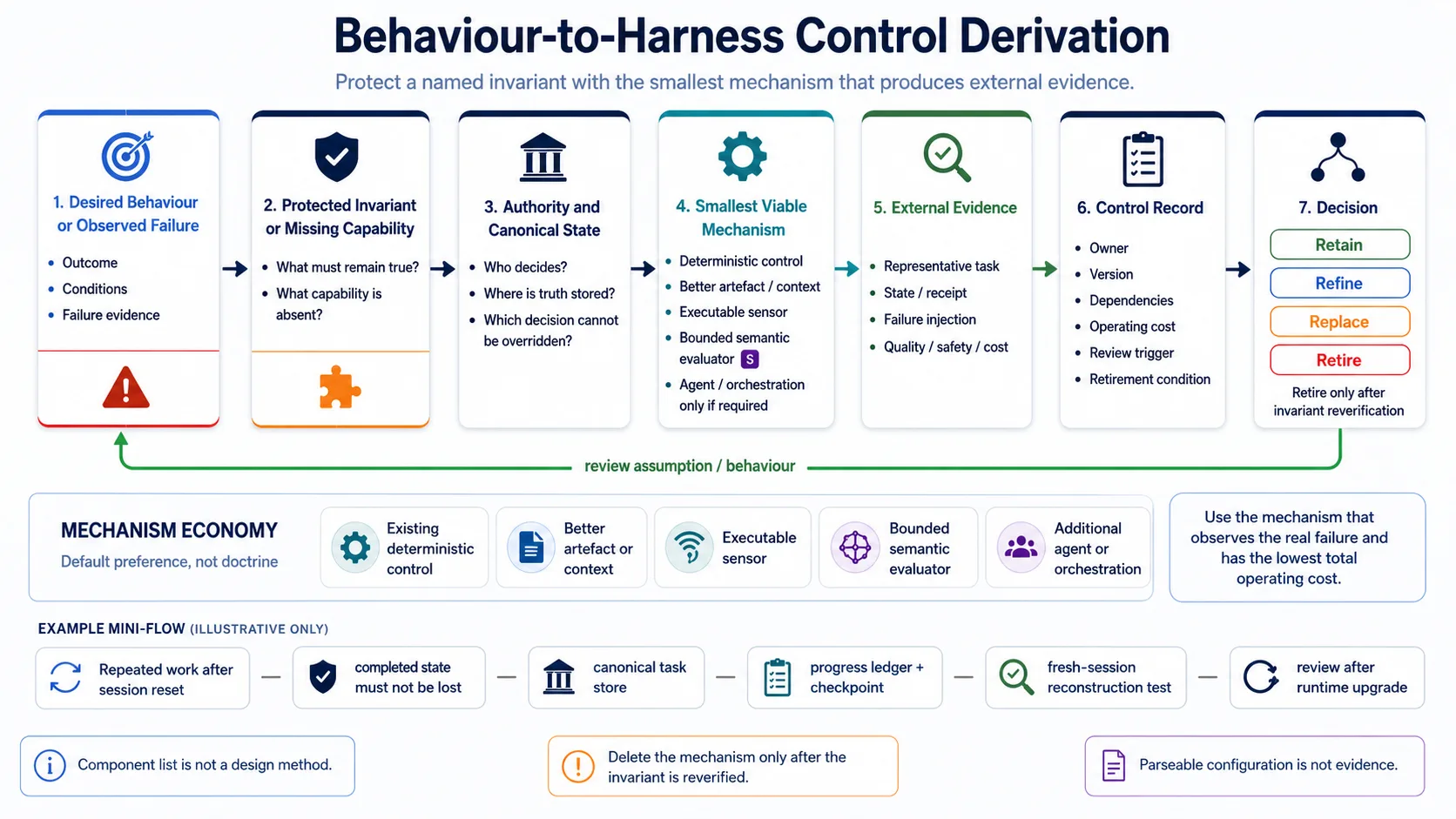
Figure 12-1|從期望行為或已觀察 Failure 出發,依序找出缺少的控制、最小機制、外部證據與刪除條件。
不要從元件清單開始
第一次設計 Harness 時,很容易先問:
- 要不要加 Memory?
- 要不要上 MCP?
- 要不要做 Multi-agent?
- 要不要加 Reviewer?
- 要不要買一個 Agent Platform?
這些問題都太早。
它們直接跳到解法,卻沒有先說明要改變哪個行為、阻止哪個失敗,以及完成後拿什麼證明機制有效。
更可靠的推導順序是:
Desired behaviour or observed failure
→ Protected invariant or missing capability
→ Authority and canonical state
→ Smallest viable mechanism
→ External evidence and operating cost
→ Owner, review trigger and retirement condition
這個順序把 Harness 元件從「看起來應該有」,改成「為某個可描述的問題負責」。
一個簡單例子
假設目標是讓 Agent 在隔天接續一項長任務,而不是每次重新掃描整個 Repository。
Observed failure:
- 新 Session 不知道上一輪完成了什麼
- 已執行 Tool 的副作用無法確認
- Agent 重做已完成工作
- 任務狀態只存在 Transcript
需要保護的 Invariant:
- 已完成工作不應被當成未開始
- 外部副作用必須有可查詢 Receipt
- 新 Session 必須能從 Durable Evidence 重建
- 任務狀態只能由 Canonical Authority 推進
最小機制可能是:
- 一份結構化 Progress Ledger
- 一個由 Runtime 管理的 Checkpoint
- 可引用的 Artifact
- Session Bootstrap 驗證
- Side-effect Operation ID
這時才有理由增加 Part 07 講過的長任務元件。若一份小型 Ledger 已經能解決問題,就沒有必要先部署一套 Multi-agent Coordination Platform。
每個新機制都應留下 Control Record
至少記錄:
control_id: durable-progress-ledger
failure_addressed: repeated work after session reset
protected_invariant: completed task state is not lost
authority: canonical-task-store
evidence:
  - fresh-session-reconstruction-test
  - duplicate-work-rate
cost:
  latency: low
  maintenance: medium
owner: agent-platform
review_triggers:
  - runtime upgrade
  - task model change
retirement_condition: native runtime state proves equivalent behaviour
這份 Record 不是永久許可證。它讓團隊知道元件為何存在、誰維護、如何驗證,以及底層能力改變後何時重新審查。
Mechanism Economy
同一個 Failure Mode 可能有很多解法。較合理的偏好順序通常是:
- 使用現有的 deterministic control
- 改善 Artifact 或 Context
- 增加可執行 Sensor
- 使用範圍明確的 Semantic Evaluator
- 最後才增加 Agent 或 Orchestration
這是一個預設偏好,不是宗教戒律。若 deterministic 機制無法表達語意風險,或維護成本已高於一個受限 Evaluator,就應以代表性 Evidence 比較,而不是為了「規則優先」繼續堆規則。
若 JSON Schema 能攔截參數錯誤,就不必讓另一個 Agent 花一輪推理來猜參數是否合理。若 Architecture Test 能確認 Dependency Direction,也不要把規則留在長 Prompt 裡,等模型每次重新理解。
模型適合處理語意、不確定性與開放探索。它不該被拿來替代每一個已能清楚編碼的 Constraint。
Deterministic-first 不是排斥 Agent
Deterministic-first 的意思,是先固定已知不能漂移的邊界,再把真正需要判斷的部分交給模型。
適合固定化的通常包括:
- Authentication 與 Authorisation
- Tenant 與 Resource Scope
- Input Validation
- Retry、Timeout 與 Budget
- State Transition
- Destructive 或 Financial Commit
- Required Verification Gate
- Audit 與 Release Authority
適合模型決策的通常包括:
- 模糊任務的拆解
- 語意 Routing
- 開放式搜尋策略
- 候選方案生成
- 無法以完整規則列舉的內容判斷
這不是把 Agent 關進一條死板 Workflow。它是在回答另一個問題:
哪些自由能增加任務品質,哪些自由只會增加不可預測性?
Anthropic 將 Workflow 與 Agent 區分為預先定義路徑和模型動態控制路徑,並建議只有在額外複雜度能實際改善結果時才加入 Agentic Layer。[1]
固定的是 Invariant,不一定是實作
例如「付款前必須有有效 Approval」是 Invariant。它可以由 Policy Engine、Workflow Gate 或受控 Transaction Service 實作。當底層平台提供更可靠的原生能力時,可以替換本地 Wrapper,但不能因為產品頁寫了「支援 Approval」就直接刪掉 Invariant。
同樣地:
- 可以刪除自製 Retry Wrapper,但不能失去 Attempt Budget 與 Unknown Outcome Control。
- 可以刪除 Secondary Reviewer,但不能失去 Blocking Criterion 的 Independent Evidence。
- 可以把 Memory Store 換成 Native Session State,但不能讓 Transcript 重新成為唯一狀態來源。
因此 Build-to-delete 的目標不是「越少控制越好」,而是:
保留必要 Invariant,用成本更低、責任更清楚的機制實現它。
例外與逃生路徑也要被治理
Deterministic Gate 若遇到合法例外,不能靠模型偷偷繞過。應使用:
- Explicit Exception Type
- Authority
- Scope
- Expiry
- Evidence
- Audit Record
- Revalidation Trigger
否則「彈性」只會成為未命名的第二套 Policy。
元件順序錯了,元件本身再完整也沒用
Harness 的問題不只在於有沒有 Policy、Hook、Memory 與 Verifier,也在於它們插入 Agent Loop 的哪個位置,以及哪一個決策可以覆蓋哪一個決策。
一條較穩定的整合順序可以簡化為:
Receive event
→ Authenticate actor and resolve tenant
→ Load canonical state and control signals
→ Apply pre-discovery visibility and data policy
→ Build bounded context and capability snapshot
→ Call model
→ Inspect proposed operation
→ Canonicalise resource and arguments
→ Apply per-operation authorisation and approval
→ Execute or accept background work
→ Persist receipt, effect state and audit record
→ Append correlated observation
→ Verify terminal candidate
→ Commit completion, checkpoint or continuation
這裡其實有兩種 Policy Boundary:
- Pre-discovery Policy:決定哪些資料、Tool Metadata 與資源可以被看見。
- Per-operation Policy:在實際 Resource 與 Argument Canonicalise 後,決定這一次 Operation 是否能執行。
把兩者都寫成一個模糊的 policy_check(),很容易讓可見性與最終授權互相代替。
順序本身具有安全與可靠性意義:
- Permission 若在 Path Canonicalisation 前執行,
../、symlink 或 alias 可能讓授權判斷失效。 - Dynamic Tool 已更新,但 Prompt 還持有舊 Catalog,模型會對不存在的能力做規劃。
- Compaction 若刪除 Side-effect Receipt,後續 Retry 可能重複付款或寄信。
- Task 先被標記
completed,Verifier 才開始執行,Pass State 就已經提前洩漏。 - Scheduled Trigger 若繞過 Identity 與 Policy,它只是換一條入口越權。
- Background Completion 若直接重用原 Tool Result Channel,可能被當成第二次同步回傳。
Production Harness 可以拆成多個 Event-driven Service,不必真的塞進一個 while True。不能丟的是 Protocol Order、Authority、Correlation 與 State Transition。
十個反模式,背後其實是十種責任逃逸
反模式不是因為某個技術看起來老派,而是它把應被系統承擔的責任藏起來了。
| 反模式 | 表面做法 | 被藏起來的責任 |
|---|---|---|
| Prompt-only Control | 把權限、Budget、Retry 都寫進 Prompt | Runtime Enforcement |
| Model Self-certification | 模型說完成就標記成功 | Independent Verification |
| Blind Retry | 所有 Error 都重試 | Error Classification、Idempotency、Reconciliation |
| Hidden Control Flow | 大量 Hook 與 Callback 沒有順序文件 | Traceability 與 Authority |
| Tool Equals Function | 有函式就算 Tool | Schema、Permission、Timeout、Receipt、Error Taxonomy |
| Split-brain State | Planner、Tool Layer、Verifier 各自存狀態 | Canonical State Authority |
| Final-answer-only Eval | 只看最後文字 | Trajectory、Side Effect、Safety 與 Cost |
| Separate Fake Eval Pipeline | Eval 使用另一條簡化流程 | Production Parity |
| Context Dumping | 全歷史、文件與 Tool Result 全塞入 | Selection、Budget 與 Freshness |
| Framework-first | 先選平台再找問題 | Workload、Failure Mode 與 Completion Contract |
其中最危險的不是某個元件做錯,而是團隊逐漸習慣「反正另一層會處理」。
Planner 假設 Tool Layer 會補 Validation;Tool Layer 假設 Policy 已在上游跑過;Verifier 假設 Transcript 就是 Canonical State。最後每一層都有一部分真相,沒有任何一層持有完整責任。
Pattern Catalog 是解法語彙,不是固定框架
這個系列介紹過許多 Pattern:
- Deterministic-first Orchestration
- Fresh-context Iteration Loop
- Workspace Isolation
- Task Portfolio Delegation
- Review Feedback Promotion
- Artifact Pipeline
- Entropy Management
- Build-to-delete
Pattern 的價值,是替重複問題提供一組可討論、可組合的解法語彙。
它不代表每套 Harness 都要把所有 Pattern 裝滿。
每個 Pattern 應有一份 Qualification Record:
pattern: fresh-context-iteration
problem: quality degrades across long sessions
applicability:
  - task can checkpoint safely
  - startup reconstruction is reliable
counterconditions:
  - low-latency conversational task
required_authority:
  - canonical progress state
required_evidence:
  - fresh-session reconstruction test
known_costs:
  - startup latency
status: conditional
owner: agent-platform
review_by: 2026-10-01
選擇 Pattern 時,至少要回答:
- 它對應哪個 Failure Mode 或 Protected Invariant?
- 它需要哪個 State 與 Authority?
- 它增加什麼 Runtime、Security 與 Operational Cost?
- 哪個 Evidence 能證明它有效?
- 有哪些 Countercondition 或 Interaction Effect?
- 何時重新測試、降級或刪除?
Pattern 的狀態可以是:
candidatetrialadoptedconditionaldeprecatedretired
若一個模式只在特定 Model、Repository 或 Workload 有效,就應標示為 conditional,而不是包裝成新的工程定律。Pattern Catalog 是治理中的活文件,不是架構購物清單。
Harness 不只適用於程式碼
只要一項工作可以定義 Input、Constraint、Intermediate Artifact、Evidence 與 Acceptance,Harness 就能用在非程式碼產物。
一條 Domain-agnostic Artifact Pipeline 可以是:
Analyse
→ Build task-specific instructions
→ Draft
→ Critique
→ Revise
→ Validate
→ Publish
它可以用於:
- 研究報告
- 翻譯與本地化
- 財務文件
- 資料清理
- 法規比對
- 技術文章
- 圖片或簡報製作
關鍵不是多跑幾次模型,而是把每個階段的 Artifact 與 Authority 分開。
例如 Critique 階段只診斷問題,Revision 才負責修改;Validate 依靠獨立規則、來源或 Reviewer 判斷,而不是讓 Draft Agent 自己替自己蓋章。
大型 Artifact 可以分塊並行,但所有 Worker 必須共享:
- Glossary
- Style Contract
- Source Snapshot
- Global Outline
- Cross-chunk Reference Rules
局部段落全部通過,不代表整份文件沒有重複、矛盾或論點漂移。合併後仍需要 Global Validation。
Capability-tiered Coordination 要按風險與可驗證性切,不是按價格切
一個 Workload 可能同時包含少量高判斷工作,以及大量機械性閱讀、分類、轉換與查詢。
這時可以讓較強的 Coordinator 負責:
- Task Decomposition
- Ambiguity Resolution
- Cross-worker Conflict
- Coverage Review
- Final Synthesis
較便宜或較快的 Worker 負責:
- 受限 Retrieval
- 格式轉換
- 分類
- 結構化抽取
- 已有 Rubric 的局部檢查
但「強模型規劃、便宜模型執行」不是普遍省錢公式。
Routing 至少要同時考慮:
- Task Difficulty
- Failure Blast Radius
- Worker Capability Evidence
- Verifier Coverage
- Escalation Cost
- Data/Tool Permission
- Latency Objective
- Total Cost,而不是 Token 單價
以下情況不適合分層:
- 子任務高度耦合
- Worker 錯誤很難被 Coordinator 或 Verifier 發現
- 每一步都需要高階判斷
- 協調與驗證成本高於節省
- Failure Blast Radius 太大
- Child Output 會被 Parent 不經驗證地當成可信指令
每個 Routing Rule 都應留下 Segment-level Outcome、Cost 與 Escalation Evidence。只按 Token 單價切割,常會把最難驗證的錯誤送進最便宜的路徑,再把節省的成本花在事故調查。
Build、Buy、Compose 是逐邊界決策,不是整套系統三選一
一套 Harness 很少需要全做、全買或全由開源元件拼裝。較實際的做法,是對每個 Boundary 分別判斷:
- Canonical State
- Agent Loop/Runtime
- Sandbox
- Tool/Protocol Integration
- Approval/Policy
- Evaluation
- Observability
- Operator UI
- Scheduling/Queue
- Knowledge/Artifact Store
Build
適合:
- 核心流程高度差異化
- 安全、資料與部署限制特殊
- 團隊需要掌握低層 Runtime
- 現有系統已擁有多數 Primitive
- 有長期維護、On-call 與 Upgrade 能力
成本不只在首次開發,也包括 Reliability、Observability、Protocol Compatibility、Migration、Incident 與人員流動。
Buy/Adopt
適合:
- 需要快速建立標準流程
- Workload 接近產品預設
- 可接受供應商的 State Model 與 Control Plane
- SLA、Data Governance、Export 與 Incident Process 符合要求
主要風險是:
- Lock-in
- Hidden State
- Policy/Identity Mismatch
- Data Residency
- Pricing Change
- Capability/Protocol Drift
- Export 或 Migration 困難
Compose
選用少量邊界清楚的元件:
Issue Tracker
+ Task Runner
+ Coding Agent
+ Container Sandbox
+ Existing CI
可替換性通常較好,但 Integration Contract、State Handoff、Version Compatibility、Security Patch 與 Incident Ownership 由自己承擔。
Shared Responsibility 必須寫下來
每個 Boundary 至少記錄:
| 問題 | 需要答案 |
|---|---|
| State authority | 誰持有 Canonical State? |
| Security | 誰負責 Identity、Credential、Patch 與 Incident? |
| Recovery | Crash、Timeout、Unknown Outcome 如何處理? |
| Evidence | 哪些 Log、Receipt、Eval 與 Audit 可 Export? |
| Change | API/Schema/Price 改變時誰負責遷移? |
| Exit | 如何停用、搬走或回滾? |
工具選擇需要 Evidence Profile,不是單一 Ladder
Marketing、README、Demo、Test、PoC 與 Production Evidence 的確有不同可信度,但 Evidence 不是只有一條由低到高的樓梯。
一個候選至少應從五個維度評估:
- Source authority:官方規格、Repository、二手描述
- Environment fidelity:Demo、Sandbox、代表性 Workload、Production
- Failure coverage:Happy Path、Crash、Cancellation、Recovery、Security
- Recency:版本、Commit、Review Date
- Exitability:Export、Migration、Open Contract、Rollback
同一項工具可能有高品質官方文件,卻沒有你 Workload 的 Failure Evidence;也可能在單一 Production Case 表現良好,卻完全無法 Export。不要用一個 L5 把這些差異壓平。
Due Diligence 至少要檢查:
- 它位於 Coding Agent、Runtime、Task Runner、Orchestrator、Protocol 還是 Full Platform?
- 是否建立新的 Canonical State?
- State、Permission、Cancellation、Retry、Observability 與 Export 如何處理?
- Licence、Security Policy、Release、Migration 與 Bus Factor 如何?
- Crash 後能否恢復?Cleanup 是否正確?
- 是否能演練 Kill Switch、Export 與 Provider Outage?
- 你的 Workload 中 Success、Human Intervention、Cost 與 Evidence Completeness 如何?
重大選型還應做 Exit Drill:匯出一個真實 Run、還原其 Artifact 與 Audit,並證明停用供應商後仍能理解已發生的工作。
Coding Agent、Orchestrator、MCP Server 與 Full Lifecycle Platform 不在同一層。把不同層產品放進一張總分排行榜,只會得到一個精確但無法採購的數字。
OpenAI App Server 將 Thread、Turn、Streaming、Approval 與 Client Integration 暴露為產品介面,正好說明 Productisation 的核心是穩定 Contract 與 Lifecycle,而不只是包一層 UI。[2]
採用不是單一路線,而是按 Task Class 選擇 Operating Mode
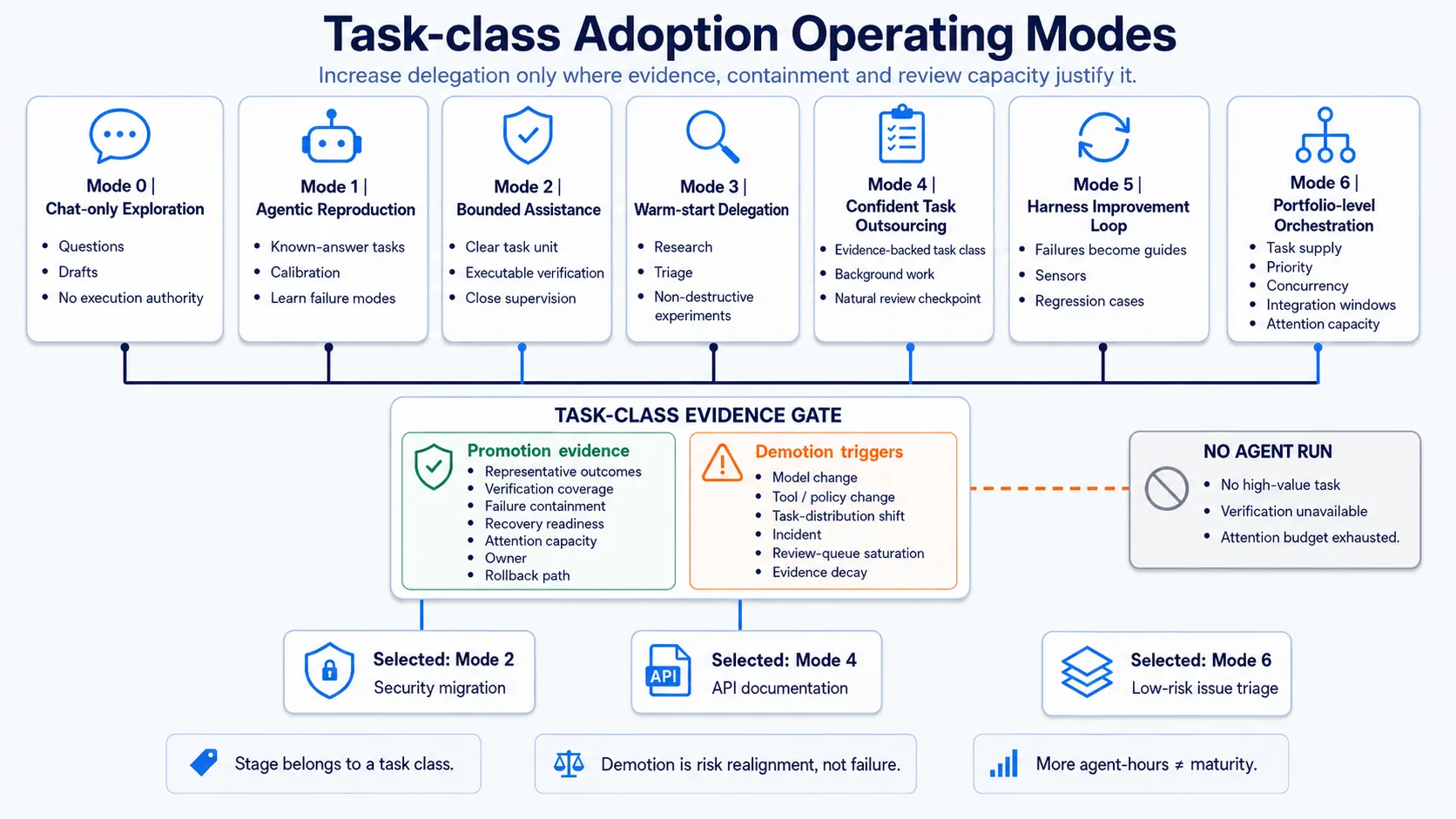
Figure 12-2|不同 Task Class 可以停在不同 Operating Mode;Promotion 與 Demotion 都需要 Evidence Gate,沒有必要把整個組織推向同一個「最高階段」。
導入 Agent 的成熟度,應由可驗證 Outcome、可控委派範圍與失敗恢復能力衡量,不是計算每天有多少 Agent 在背景運行。
以下七個 Stage 可以作為 Operating Mode:
Stage 0:Chat-only Exploration
用於問答、草稿與單點解釋。缺少 Repository Context、直接執行與外部驗證。
Stage 1:Agentic Reproduction
選擇自己已知道正確答案的任務,讓 Agent 在看不到人工解法的情況下重做。
這不是為了省時間,而是校準 Task Size、Context、Verification 與 Failure Pattern。Mitchell Hashimoto 的採用紀錄也先透過重做自己的工作建立判斷力,再逐步增加委派。[3]
Stage 2:Bounded Assistance
任務被切成清楚、可驗證的單元,並開始使用 Repository Tool、Test、Script 與 Completion Criteria。
Stage 3:Warm-start Delegation
在自然空檔啟動研究、Triage、受限實驗或非破壞性 Review,讓下一個工作時段有可用的起始 Artifact。
Stage 4:Confident Task Outsourcing
只把已有高成功率證據的 Task Class 交給背景 Agent。人類不再同步盯著每一步,而是在自然 Checkpoint 查看 Evidence。
Stage 5:Harness Improvement Loop
重複 Failure 會推動 Guide、Tool、Sensor、Executable Rule 與 Regression Eval 的更新。
Stage 6:Portfolio-level Orchestration
管理可委派任務池、優先級、並行量、人類注意力與整合窗口。
Stage 是 Task-class 狀態,不是公司頭銜
同一團隊可以同時:
- 讓 API 文件維護停在 Stage 4
- 讓 Security Migration 停在 Stage 2
- 讓開放研究停在 Stage 3
- 讓低風險 Triage 進入 Stage 6
Promotion Gate 應至少要求:
- Representative Outcome
- Verification Coverage
- Failure Containment
- Human Attention Cost
- Incident/Recovery Readiness
- Owner
- Rollback 或 Demotion Path
若 Model、Tool、Policy、Task Distribution 或 Risk 改變,Task Class 可以退回較受限 Mode。這不是倒退,而是風險重新對齊。
Anthropic 的 Managed Agents 工程文章直接提醒:Harness 內含對模型弱點的假設,模型升級後這些假設可能過時;舊 Harness 中原本有用的 Context Reset 也可能變成 Dead Weight。[4]
沒有高價值工作、Verification 不成熟或 Review Queue 已飽和時,讓 Agent 不運行也是成熟決策。
Pattern 產品化需要補齊 Capability,不必追求最高 Level
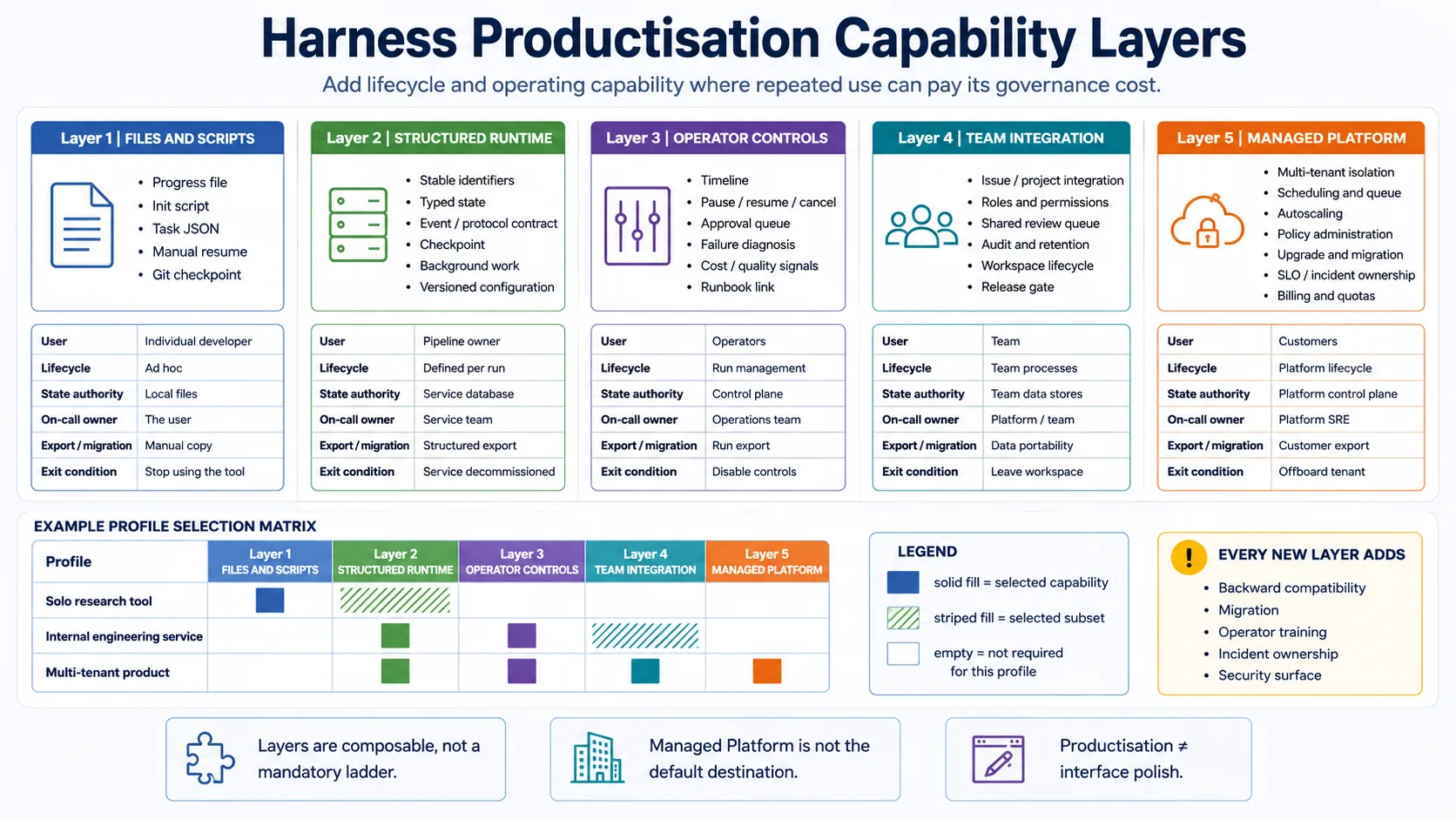
Figure 12-3|Files and Scripts、Structured Runtime、Operator Controls、Team Integration 與 Managed Platform 是可組合的 Capability Layers;每一層都需要明確使用者、責任與退出條件。
Progress File、Shell Script、Task JSON 與 Git Checkpoint 可以證明 Pattern 有效。它們還不等於團隊可穩定使用的產品。
Layer 1:Files and Scripts
- Progress File
- Init Script
- Task JSON
- Manual Resume
- Git Checkpoint
適合單人與早期實驗。
Layer 2:Structured Runtime
- Stable ID
- Typed State
- Event/Protocol Contract
- Checkpoint
- Background Work
- Versioned Config
Layer 3:Operator Controls
- Timeline
- Pause/Resume/Cancel
- Approval Queue
- Failure Diagnosis
- Cost/Quality/Attention Signal
- Runbook Link
Layer 4:Team Integration
- Issue/Project Integration
- Role/Permission
- Shared Review Queue
- Audit/Retention
- Branch/Workspace Lifecycle
- Release Gate
Layer 5:Managed Platform
- Multi-tenant Isolation
- Scheduling/Queue
- Autoscaling
- Policy Administration
- Upgrade/Migration
- SLO/Incident Ownership
- Billing/Quota
Layer 不是必經順序,也不是產品價值排名
一個內部 Tool 可能需要 Layer 2 的 Durable Runtime 與 Layer 4 的 Team Integration,卻不需要完整 Managed Platform。另一個高風險 Service 可能先需要 Layer 3 的 Operator Control,再擴充 Team Surface。
每一層都應回答:
- 誰是使用者?
- 哪個 Lifecycle 被產品化?
- 新增了哪個 State/Authority?
- 誰 On-call?
- 如何 Export/Migrate?
- 沒有這一層時,實際 Failure 是什麼?
- 何時不值得繼續升級?
Productisation 不是把 Script 包成漂亮 UI。OpenAI Codex App Server 將長生命週期 Thread、Turn、Streaming、Approval 與 Client Integration 提升為穩定介面;Anthropic Managed Agents 則將 Session、Harness 與 Sandbox 解耦,讓底層實作能替換。兩者都顯示,產品化的核心是 Lifecycle Contract 與替換邊界。[2][4]
Platform 還會創造新的治理債:Migration、Backwards Compatibility、Tenant Isolation、Operator Training 與 Incident Ownership。只有當重複使用、團隊協作或營運需求足以支付這些成本時,才值得往上增加 Layer。
Template 可以縮小解法空間,也可能凍結錯誤架構
企業常反覆建立幾類 Topology:
- API Business Service
- Event Processor
- Batch Pipeline
- Data Dashboard
每類 Topology 可以有版本化 Harness Template,提供:
- Repository Structure
- Architecture Guide
- Executable Dependency Rule
- Approved Toolchain
- Bootstrap/Run/Test Workflow
- Observability Contract
- Security Baseline
- Deployment Check
- Evaluator Rubric
Template 的作用是縮小合法解法空間,讓 Guide 與 Sensor 能覆蓋更多變更,同時保留局部實作自由。MartinFowler.com 將 Harness 描述為結合 Feedforward Guide 與 Feedback Sensor 的調節系統;Template 可以把這些 Control 變成一套可重複使用的環境。[5]
但 Template 也會 Drift。
至少要管理:
- Template Version
- Generated 與 Owned File 的差異
- Upgrade Path
- Compatibility Test
- Local Override Policy
- 回饋上游的 Contribution Flow
若 Domain 差異很大,或 Template 迫使團隊使用不自然的架構,Variety Reduction 就不再是幫助,而是把錯誤決策複製得更快。
把重複 Review 升級,但先把它當成 Hypothesis
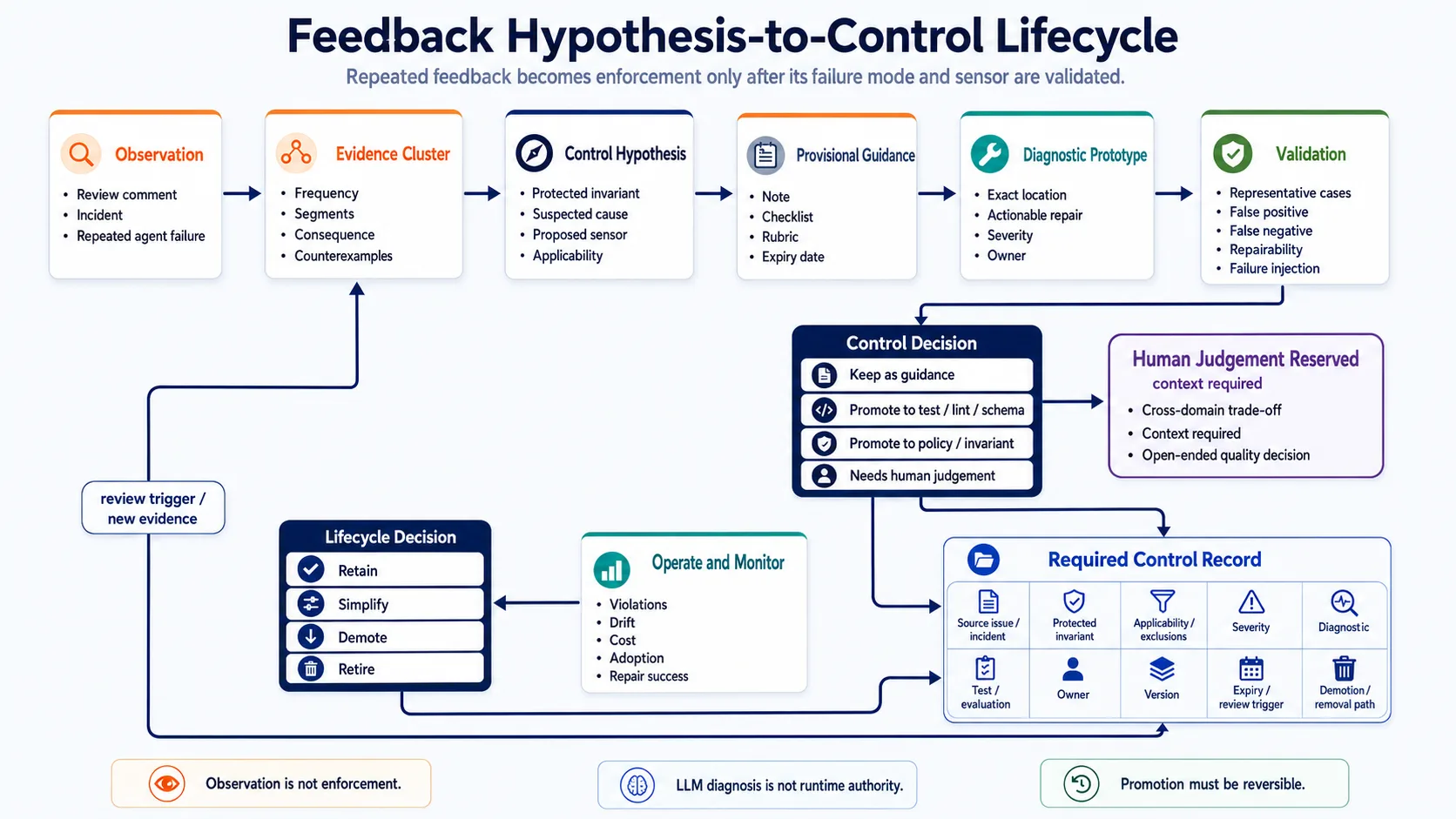
Figure 12-4|Review Feedback 先形成可驗證 Hypothesis,再經代表性 Case、False-positive 與 Failure-injection 測試,才可能成為 Diagnostic、Executable Gate 或 Runtime Invariant;規則也可以被降級與退休。
一個問題若在 Code Review、Incident 或 Agent Run 中反覆出現,不應永遠依靠人類再提醒一次。
但「重複出現」不等於「已理解根因」。較安全的 Lifecycle 是:
Observation
→ Cluster repeated evidence
→ Form a control hypothesis
→ Provisional guidance or checklist
→ Build diagnostic and representative cases
→ Evaluate false positive, false negative and repairability
→ Promote to executable gate when justified
→ Monitor, demote or retire
OpenAI 的 Harness Engineering 案例描述了類似方向:反覆出現的 Review Feedback 與不一致會被提升成 Repository Knowledge、Tooling、Mechanical Check 與 Cleanup Process。[6]
Google Conductor 的 Automated Reviews 也將 Spec/Plan Compliance、Test Suite、Guideline 與 Basic Security Check 放進 Post-implementation Verify Step,說明 Feedback 可以被產品化成可重跑 Evidence,而不只停在 Review Comment。[7]
適合 Promotion 的問題通常具備:
- 重複且有代表性
- 邊界清楚
- Violation Cost 高
- Sensor 能看見 Failure
- False Positive/Negative 可量測
- 能提供 Agent-actionable Diagnostic
- 有 Owner 與 Rollback
不適合直接機械化的包括:
- 依情境變化的設計品味
- 一次性例外
- 尚未理解根因的 Incident
- 需要跨領域取捨的判斷
- 無法區分好壞案例的模糊偏好
每個 Promoted Rule 應記錄:
- Source Incident/Review
- Protected Invariant
- Applicability/Exclusion
- Severity
- Diagnostic
- Test/Eval
- Owner
- Version
- Expiry/Review Trigger
- Demotion/Removal Path
Promotion 不是單向升級。一條 Gate 若 False Positive 過高,可以降回 Diagnostic 或 Checklist;底層能力改進後,也可以退休。否則 Harness Improvement Loop 會長成規則堆肥場。
Harness Entropy 會從成功中長出來
一套 Harness 開始產生更多 Output 後,Entropy 通常不是突然爆炸,而是慢慢累積:
- 重複 Prompt 與互相衝突的 Instruction
- 過期 Tool Schema
- 無 Owner 的 Memory
- Dead Config 與 Feature Flag
- Progress Ledger 與實際 Repository 不一致
- 文件引用已不存在的 Code
- 重複 Hook
- Eval 仍測試舊行為
- Platform 已提供能力,但本地 Wrapper 還在
- 同一 Invariant 被三個元件各自維護
- Deprecated Component 沒有 Consumer Inventory
OpenAI 的 Agent-first Repository 經驗也提到,Agent 會複製既有 Pattern,包含不一致與不理想的 Pattern,因此需要 Golden Principle、Mechanical Check 與持續 Cleanup。[6]
Entropy 需要 Inventory 與 Dependency Graph
至少要能查詢:
- Component/Rule/Knowledge Artifact
- Owner
- Protected Invariant
- Upstream/Downstream Dependency
- Active Consumer
- Last Used
- Last Verified
- Cost
- Replacement Candidate
- Deprecation Status
- Retirement Blocker
沒有 Consumer Inventory,刪除看起來沒人使用的 Hook,可能直到月底批次工作才爆炸。沒有 Invariant Map,合併兩個 Rule 也可能把其中一條安全邊界一起磨掉。
Cleanup 使用 deterministic sensor 優先
- Broken Link 與 Freshness Check
- Duplicate/Dead-code Analysis
- Schema Compatibility Test
- Architecture Fitness Function
- Unused Tool Telemetry
- State-to-Repository Reconciliation
- Dependency 與 Security Scanner
- Feature-flag Age
- Unowned Artifact/Rule Report
LLM 可以提出疑似問題、Cluster 與 Repair Candidate,但刪除 Tool、Rule、Memory、Policy 或 Artifact 前仍需要 Evidence、Dependency Check 與 Authority。
為維護複雜度建立 Budget
可以追蹤:
- Active Control Count
- Controls without Owner
- Rules past Review Date
- Duplicate Authority
- Deprecated-but-active Component
- Mean Time to Explain a Run
- Upgrade/Migration Work
- False-positive Review Cost
- Telemetry/Storage Overhead
這些不是成熟度分數,而是 Triage Signal。單純把 Component Count 壓低也可能造成反向災難,因為五個清楚元件未必比一個巨型「萬能 Controller」更難維護。
真正要降低的是無法解釋、責任重疊、沒有 Evidence 與無法退休的複雜度。
Operational Knowledge 也需要生命週期與 Authority
當 Repository 文件、Spec、Skill、Runbook 與 Eval Case 成為 Agent 的 Operational Knowledge,它們需要和 Code 一樣的治理。
每份 Knowledge Artifact 至少應記錄:
- Owner
- Status
- Last Verified
- Canonical Source/Source Authority
- Related Code/Schema/Policy
- Supersedes/Superseded By
- Review Cadence
- Generated 或 Hand-authored
- Consumer/Retrieval Surface
- Retention/Archive Rule
一條 Doc Gardening Loop 可以是:
Scan
→ Classify stale, orphan, duplicate or conflicting knowledge
→ Open a bounded repair
→ Verify against code or authority
→ Update indexes and links
→ Archive, supersede or delete safely
Google Conductor 將 Project Context 從短暫 Chat Log 移到 Version-controlled Markdown Spec/Plan,後續 Automated Reviews 再用這些 Artifact 驗證實作。這說明 Operational Knowledge 的價值來自可版本化、可引用、可驗證,而不只是「文件很多」。[7]
Knowledge Score 只能作 Triage,不能取代個別 Finding。一個 92 分的知識庫,仍可能包含一份會讓 Agent 使用錯誤 Production Credential 的過期 Runbook。
Core、Reference、Watchlist 與 Expired 要分流
所有新資訊都進核心庫,只會讓檢索品質與維護能力一起下降。
可以採用:
- Core Knowledge:通用、高訊號、有可靠來源,且能持續維護
- Reference/Source-only:有查閱價值,但產品或版本依賴較重
- Watchlist:新興、爭議或待實測
- Rejected/Expired:過時、重複、錯誤或維護成本高於價值
Agent 可以抓取、摘要、去重與提出 Tier 建議。是否進 Core 是治理決策,需要 Human Admission Gate。
Archive 與 Delete 也要分開:
- 仍被 Historical Run、Audit 或 Citation 引用的內容,應保留 Immutable Archive 或 Tombstone。
- 已無 Consumer、無 Legal/Audit Requirement,且 Supersession 完整的內容,才適合刪除。
- Retrieval Index 與 Cache 必須在 Status 變更後一起失效。
每新增一項知識,都要問:
它增加的檢索與決策價值,是否高於它增加的維護熵?
生態雷達是決策隊列,不是熱門工具排行榜
Agent Harness 生態變動很快。將每個新 Repository、產品功能與市場數字寫進 Stable Theory Core,會讓理論篇很快變成考古現場。
可以建立四個 Ring:
- Adopt:已在自己的環境驗證,符合安全與品質門檻
- Trial:正在受控 PoC,有 Hypothesis、Owner 與退出條件
- Assess:值得研究,但尚未投入實測
- Hold:過時、重疊、風險過高、缺乏維護或不適用
Ring 是組織的採用決策,不是工具的全球評分。同一個產品可以在 A 團隊是 Adopt,在 B 團隊因 Data Residency 而是 Hold。
每個候選至少記錄:
name: example-runner
category
name: example-runner
category: task-runner
primary_use_case: issue-to-isolated-run
source_snapshot: 2026-07-08
licence: verify-from-primary-source
deployment_model: self-hosted
provider_dependency: none
state_authority: external-database
evidence_profile:
  source: official-repository
  environment: executable-example
  failure_coverage: incomplete
  recency: current
  exitability: untested
ring: assess
owner: platform-team
known_risks:
  - incomplete cancellation semantics
  - no verified export path
next_review: 2026-08-15
這份記錄能說明研究狀態,不能證明工具可靠,也不能自動把它提升到 Trial 或 Adopt。
Promotion Path 應包含:
Discovery
→ Primary-source review
→ Architecture classification
→ Sandbox trial
→ Failure injection
→ Security and data review
→ Measured comparison
→ Exit drill
→ Adopt
GitHub Stars、社群熱度、Awesome List 與精美 Demo 只能幫助安排 Assess 優先級。它們不是 Production Evidence。Awesome List 應保存 Snapshot Commit 與 Review Date,個別工具仍需回到 Primary Source 驗證。[8]
Landscape Snapshot 必須標記日期與 Review-by Date;Coding Agent、Runtime、Orchestrator、Task Runner、Platform、Protocol 也要分層比較。產品改名、被收購、停止維護或被模型原生能力吸收時,候選要能降級、替換與退休。
Ecosystem Radar 的價值,不是讓團隊追上每個新名詞,而是讓「我們為什麼還沒採用它」也有一個可辯護的答案。
每個元件都要有 Assumption Ledger
Harness 元件不是自然法則。每一個元件都隱含一項判斷:
沒有這個元件,模型、工具或環境會以某種方式失敗。
因此每個重要元件都應留下 Assumption Ledger:
component: secondary-review-agent
version: reviewer-7
protected_invariant: cross-module regressions require independent evidence
assumption: primary agent and deterministic suite miss a material class of regressions
failure_addressed: unverified integration changes
dependencies:
  - integration-test-suite@12
  - completion-contract@5
baseline: primary-agent-plus-deterministic-suite
evidence:
  - eval-run-2026-07-08
segments:
  - high-risk-invoice
  - ordinary-invoice
cost:
  latency: high
  tokens: high
  operations: medium
risk_floor:
  security_non_inferiority: required
ablation:
  method: shadow-disable-reviewer
  primary_variable: reviewer
  success_margin: no material loss on blocking criteria
decision: conditional
owner: quality-platform
last_tested_model: model-profile-v7
next_review_trigger:
  - model upgrade
  - verifier coverage increase
  - task distribution change
retirement_condition: equivalent evidence with lower cost
一份可用的 Ledger 至少回答:
- 元件保護哪個 Invariant?
- 假設哪個弱點仍存在?
- 依賴哪些其他元件?
- Baseline 與代表性 Segment 是什麼?
- 哪個 Evidence 支撐它?
- 成本與 Failure Surface 是什麼?
- 哪些 Safety/Quality Floor 不能下降?
- 誰能改變 Decision?
- 何時重測、降級或退休?
decision: retain 不是永久居民證。它只代表在某個 Model、Task Distribution、Verifier 與成本條件下,Evidence 仍支持保留。
重新測試的 Trigger 可以包括:
- Model Upgrade
- Tool/Runtime Improvement
- Context Window 或 Context Strategy 改變
- Codebase Architecture 改善
- Task Distribution/Risk Mix 改變
- Cost/Latency Pressure
- Evaluator Calibration 改變
- Native Capability Replacement
- Incident 或 Near Miss
Anthropic 在 2026 年的 Managed Agents 工程文章以一個具體例子說明這件事:較舊模型需要的 Context Reset,在較新模型上可能變成 Dead Weight。這不是「Harness 無用」,而是 Assumption Ledger 應該被重新打開。[4]
Build-to-delete:刪除機制,但保留它保護的 Invariant
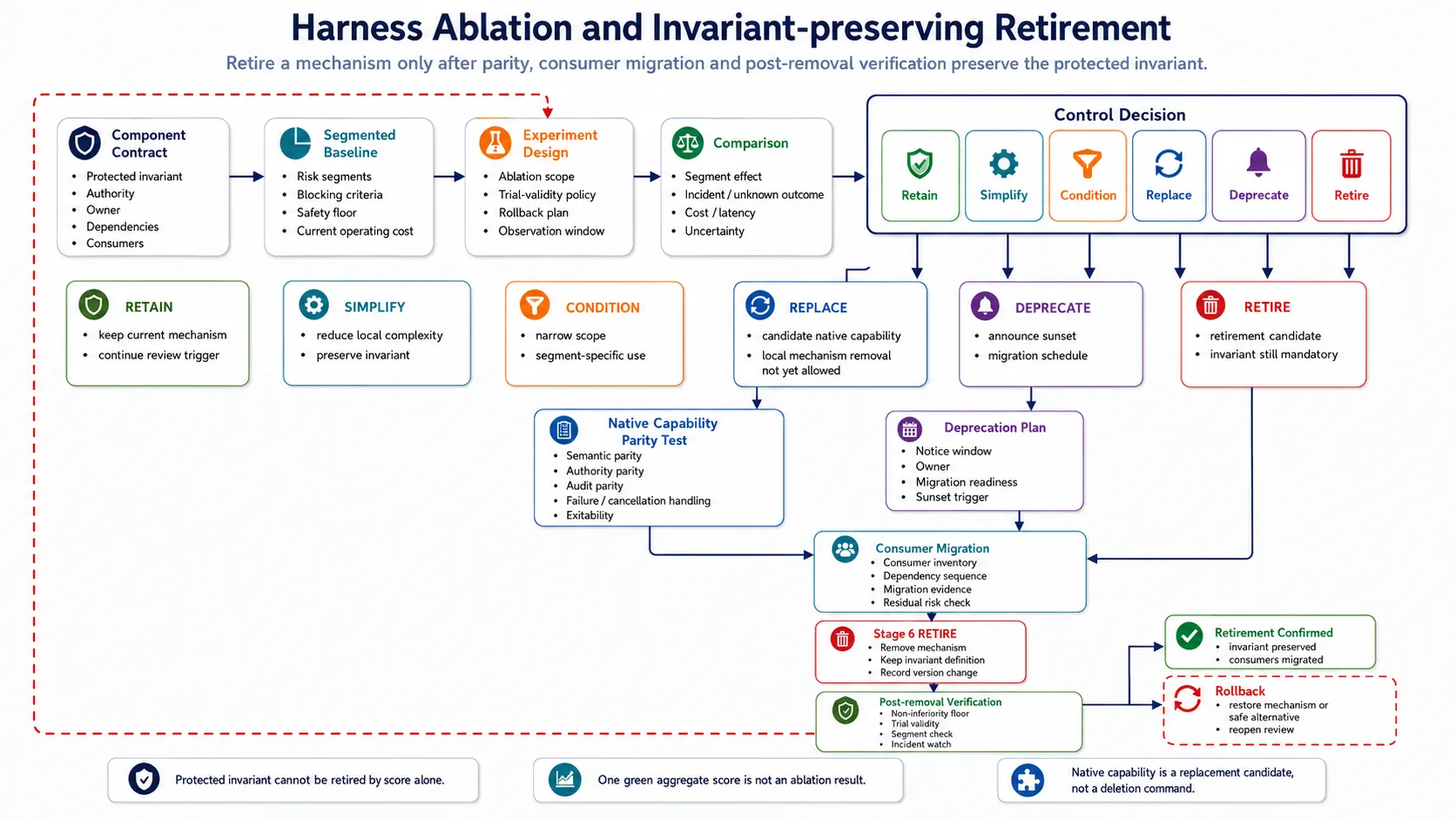
Figure 12-5|元件從 Assumption、Baseline、Experiment 與 Segmented Evidence 走向 Retain、Simplify、Condition、Replace 或 Retire;退休前必須遷移 Consumer,並證明 Protected Invariant 仍成立。
設計一個 Harness Component 時,就應準備:
- Feature Flag/Shadow Mode
- Stable Interface 或替代介面
- 獨立 Metric 與 Evidence
- 清楚 Owner
- Dependency/Consumer Inventory
- Rollback Path
- 可執行 Ablation Experiment
- Deprecation/Migration/Removal Plan
Ablation 不是隨手關掉一個 Flag
基本流程是:
Define protected invariant and baseline
→ choose representative tasks and segments
→ disable, bypass or replace one primary mechanism
→ run shadow, paired, canary or isolated trials
→ compare quality, safety, cost and failure modes
→ inspect uncertainty and interaction effects
→ retain, simplify, condition, replace or deprecate
→ migrate consumers
→ verify invariant after removal
「一次只改一個主要變數」是理想預設,但現實中 Component 可能和 Prompt、Verifier、Tool 或 State Schema 互相作用。遇到 Interaction Effect 時,可以使用 Paired Trial、Factorial Experiment 或分階段 Migration;重點是不要同時改五件事,最後只剩一個無法解釋的綠色總分。
比較至少涵蓋:
- Blocking Criterion/Task Success
- Safety Violation 與 Hard Invariant
- Segment-level Quality
- Trajectory Efficiency
- Latency/Critical Path
- Token/Monetary Cost
- Human Intervention
- Maintenance Burden
- Incident/Unknown Outcome Rate
- Trial Validity 與 Uncertainty
Non-inferiority Floor 先於平均收益
一個 Reviewer 被移除後,平均 Pass Rate 只下降 0.2%,不代表可以刪除。若下降全部集中在高風險 Invoice,或 Cross-tenant/Financial Invariant 失去保護,平均值沒有決策權。
Ablation Decision 應分開:
- Mandatory Safety/Quality Floor
- Allowed Non-inferiority Margin
- Segment
- Confidence/Uncertainty
- Operational Saving
- Migration Cost
常見決策不只 Retain 或 Remove
- Retain:仍是 Load-bearing Control。
- Simplify:保留 Invariant,減少層級或成本。
- Condition:只在特定 Risk/Task Segment 啟用。
- Replace:由 Native Capability 或較清楚機制承接。
- Deprecate:停止新增 Consumer,進入 Migration。
- Retire:Consumer 已移除,Evidence 顯示 Invariant 仍成立。
高風險、合規與複雜系統可能需要更多控制。應被刪除的是沒有可量測價值、責任重疊或假設已失效的機制,不是 Permission、Tenant Boundary、Audit 或 Independent Verification 這類 Protected Invariant。
Native Capability 是替代候選,不是刪除命令
模型、Runtime 或 Platform 新增原生能力時,先做 Parity/Failure/Migration Test:
- 語意是否真的等價?
- Authority 與 Audit 是否仍存在?
- Failure/Cancellation/Recovery 是否完整?
- 舊資料與 State 能否讀取?
- Provider Outage 時如何退回?
- Cost 與 Lock-in 是否改變?
通過後,可以 Replace 本地機制。沒通過前,「平台現在也有這個功能」只是新的 Assumption。
Build-to-delete 的成熟,不在於刪了多少,而在於團隊能安全證明:即使機制離場,它保護的行為仍然成立。
一個完整演化案例
假設團隊要讓 Agent 處理內部 Invoice Review。
第一版:只想讓它工作
團隊加入:
- 一份長 System Prompt
- Invoice Lookup Tool
- Email Tool
- 一個 Reviewer Agent
很快出現問題:
- Agent 偶爾把測試 Invoice 當正式 Invoice
- Email 發出後 Timeout,系統重試並寄了兩次
- Reviewer 只讀最終答案,沒看到 Tool Side Effect
- 規則愈加愈長
從 Failure 反推控制
團隊不再往 Prompt 繼續補句子,而是建立:
- Tenant 與 Environment Scope
- Idempotency Key 與 Email Receipt
- Canonical Task State
- Completion Contract
- Tool Trajectory Verification
- Approval Gate for external email
受限採用
先用已知答案的 Invoice 重做,接著只開放非破壞性 Review,再讓高信心 Task Class 進入背景執行。
Productisation
進度檔與 Script 逐步轉成:
- Durable Run
- Operator Timeline
- Approval Queue
- Failure Diagnosis
- Team Role 與 Audit
Feedback Promotion
多次出現的「稅號格式錯誤」從 Review Note 升級成 Schema Validation。
需要依合約語意判斷的特殊條款則保留為 Human Review,不硬寫成規則。
Ablation
模型與 deterministic suite 改善後,團隊關閉 Secondary Reviewer 做受控比較。
若 Integration Error 沒有增加,成本與延遲下降,就簡化或刪除 Reviewer。若高風險 Invoice 的錯誤增加,則只在該 Risk Tier 保留。
這套 Harness 的成熟不在於最後有多少 Agent,而在於每個控制都有 Failure、Evidence、Owner 與退出條件。
成熟 Harness 的最後判斷
成熟 Harness 不一定是元件最多,也不一定是 Agent 自動運行時間最長的 Harness。
它通常具備以下特徵:
- 邊界與 Authority 清楚
- Canonical State 單一
- Failure 可分類、可恢復
- 重要行為有外部 Evidence
- 執行過程可關聯、可觀測
- 元件可替換
- Knowledge 有 Owner 與 Freshness
- Pattern 有 Applicability 與 Countercondition
- 假設能重新測試
- 重複 Feedback 能被提升,也能被降級
- Consumer/Dependency 可查
- 不必要的機制能安全退休
- Protected Invariant 不會因簡化而消失
前十一篇處理的是 Harness 如何提供 Context、Capability、Runtime、Reliability、Safety、Quality 與 Observability。
最後一篇要留下的判斷是:
Harness 是一套持續校準的控制系統,不是一組只進不出的元件收藏。
當團隊能說清楚每個元件為什麼存在、由誰負責、如何證明有效、依賴誰,以及何時應該被簡化、替換或退休,Harness 才從 Scaffold 變成可維護的工程能力。
更精確地說,成熟的目標是 Minimum Sufficient Harness:
- 足以保護必要 Invariant
- 足以讓 Agent 完成代表性工作
- 足以在失敗時恢復與調查
- 沒有多餘、重疊、無 Owner 的控制
- 能在 Model 與 Platform 演進後重新校準
理論轉實作:Part 12 檢查表
- 每個主要元件都有 Failure/Protected Invariant、Authority、Owner、Evidence 與 Retirement Condition。
- Deterministic Control 固定安全、State、Budget 與 Pass Authority,模型只在需要語意判斷的區域獲得自由。
- Build/Buy/Compose 逐 Boundary 決策,並完成 Shared-responsibility、Export、Outage 與 Exit Drill。
- 每個 Task Class 有自己的 Adoption Mode、Promotion/Demotion Gate 與 Human-attention Capacity。
- Pattern、Template、Rule、Knowledge 與 Ecosystem Candidate 都有 Version、Status、Consumer、Review Date 與降級路徑。
- 重複 Feedback 先形成可測 Hypothesis,再依 False-positive/Negative 與 Repair Evidence 決定 Promotion。
- 高成本或重疊元件具備 Assumption Ledger、Segmented Baseline、Safety Floor、Ablation 與 Migration Plan。
- 刪除或替換完成後,團隊能重新驗證 Protected Invariant,而不是只看到成本下降。
這個系列到這裡完成了 Harness 的理論地圖。下一步進入實作時,應從一個受限 Workload、清楚 Failure Mode、Canonical State 與可執行 Completion Contract 開始,不必先蓋一座全能 Agent 城堡。
References
- Anthropic, Building effective agents, 19 December 2024.
- OpenAI, Unlocking the Codex harness: how we built the App Server, 4 February 2026.
- Mitchell Hashimoto, My AI Adoption Journey, 5 February 2026. This is a first-person adoption account, used as one practical path rather than a universal maturity model.
- Anthropic, Scaling Managed Agents: Decoupling the brain from the hands, 8 April 2026.
- Birgitta Böckeler, MartinFowler.com, Harness engineering for coding agent users, 2 April 2026.
- OpenAI, Harness engineering: leveraging Codex in an agent-first world, 11 February 2026.
- Google Developers Blog, Conductor Update: Introducing Automated Reviews, 13 February 2026.
- AutoJunjie, Awesome Agent Harness, repository snapshot reviewed 7 July 2026. Used only as an ecosystem discovery index; individual tools require primary-source verification.