「4M。」
這句話很常被當成一筆融資的摘要。它能告訴你定價,卻還沒告訴你創辦人最後剩多少、option pool 是誰先承擔、SAFE 怎麼進 cap table,也沒告訴你公司出售時 44.96% 的持股到底能不能換成 44.96% 的價金。
這篇不另外發明一堆公司或情境,只追一間虛構公司 Northstar Labs。我們從一張 cap table 開始,依序放進 SAFE、option pool refresh、Series A、Series B,再把同一張最終 cap table 丟進三個 exit waterfall。
所有數字都只是教學模型,不是市場 benchmark,也不是法律或投資建議。真正交易仍以實際 SAFE、term sheet、charter、stock purchase agreement 與其他 governing documents 為準。
80% 先放著,先把分母定義清楚
Northstar 一開始只有兩個欄位:8,000,000 units 的創辦人 common,加上 2,000,000 units 的員工 option pool。
| Holder / reserve | FD-equivalent units | FD % |
|---|---|---|
| Founders / common | 8,000,000 | 80.0% |
| Employee option pool | 2,000,000 | 20.0% |
| Total | 10,000,000 | 100.0% |
這裡的 80% 是 fully diluted modelling basis 下的 80%。如果只算 issued common,創辦人的比例會更高;把已保留但尚未授予的 option pool 放進分母後,才是上表的 80%。之後如果再納入可轉換證券、warrants、options 或其他 as-converted 項目,分母還會繼續變。
所以看到一句「我有 40%」,先不要急著比較。至少要知道三件事:cap table 的 as-of date、分母裡有哪些 securities / reserves,以及 SAFE、notes、preferred、options、warrants 採用什麼 conversion assumptions。
Fully diluted 比較像一組明確寫出的模型假設,不是一個離開情境後仍永遠固定的百分比。Northstar 後面所有計算都沿用這個 basis,而且每一輪只從上一張 cap table 往前走。
SAFE 還沒變成 priced round,持股已經先動了
Northstar 接下來需要 $1.0M。募資工具可以是 SAFE、convertible note,或直接進 priced preferred round,但三者留下的時間軸和權利不同。
以 Y Combinator 目前的標準 post-money SAFE 形式來說,SAFE 是未來轉成股權的契約,不是 debt,沒有 interest,也沒有 maturity date,之後會依契約機制在 equity financing 中轉成 preferred stock。這個敘述只適用於所採用的 SAFE 形式,不能把所有司法管轄區、所有同名工具都當成完全相同的法律物件。
Convertible note 則是 debt,通常帶 interest 與 maturity date,轉換還可能受到 valuation cap、discount、qualified financing trigger 等條件影響。Priced preferred round 會直接把價格、發行 shares 與 preferred rights 放進當輪文件。NVCA 的 model legal documents 把典型美國 VC financing 拆成 Certificate of Incorporation、Stock Purchase Agreement、Investors’ Rights Agreement、Voting Agreement、ROFR / Co-Sale Agreement 等文件。那些是 model documents,不會自動成為任何公司的 operative terms。
Northstar 這裡先選一張簡化的 YC-style post-money SAFE:
- SAFE investment:$1.0M
- Post-money valuation cap:$10.0M
- 不把 discount、MFN 或 pro-rata exercise 放進這個數字案例
- 簡化假設:這張 SAFE 在當下 modelling basis 代表 10% ownership
在這個 valuation-cap 教學路徑中,可以先用:
10M = 10%
原本 10,000,000 FD-equivalent units 的 cap table 若要加進一個最後占 10% 的 SAFE,模型需要約 1,111,111 SAFE-equivalent units。
| Holder / reserve | Units | FD % after SAFE |
|---|---|---|
| Founders | 8,000,000 | 72.0% |
| Option pool | 2,000,000 | 18.0% |
| SAFE | 1,111,111 | 10.0% |
| Total | 11,111,111 | 100.0% |
Series A 還沒 close,創辦人的 fully diluted ownership 已經從 80% 降到 72%。
Series A 的新錢還沒進來,Option Pool 可以先吃掉一段稀釋
接著,Series A 投資人要求融資前把 option pool 補到 pre-money fully diluted denominator 的 20%。
Northstar 原本有 2,000,000 pool units。SAFE 放進模型後,若要讓 pool 在 Series A 前回到 20%,需要增加約 277,778 units,把 pool 拉到約 2,277,778 units。
此時還沒有 Series A 新錢,cap table 已經是:
| Holder / reserve | Pre-Series-A FD % |
|---|---|
| Founders | 70.24% |
| Refreshed option pool | 20.00% |
| SAFE | 9.76% |
| Total | 100.00% |
創辦人因此從 72.00% 再降到約 70.24%。這一段不是 Series A investor 已經拿到 shares,而是 pre-money denominator 先被擴大。
Carta 對 option pool 的說明也把 pre-money 與 post-money pool 分開處理。Pool increase 若放在 pre-money shares,主要由 closing 前的 holders 承擔;如果融資後才增加,新投資人也可能分攤那段 dilution。實際交易仍以 term sheet 的寫法為準。
現在才放入 Series A:
- Pre-money valuation:$16M
- New money:$4M
- Post-money valuation:$20M
- 簡化模型下 Series A post-money ownership:20%
Pool refresh 後,Northstar 的 pre-money FD denominator 約為 11,388,889 units。Implied price 約 $1.4049 per unit,Series A 約拿到 2,847,222 units。
| Holder / reserve | Post-Series-A FD % |
|---|---|
| Founders | 56.20% |
| Option pool | 16.00% |
| SAFE-converted security | 7.80% |
| Series A | 20.00% |
| Total | 100.00% |
同一句「4M raise」,還藏著另一個問題:pool 是在投資人進來以前補,還是之後補?
只改 pool timing,結果就不一樣
保留 4M raise 不動,但把 pool refresh 改到融資後,並把 pool 調成 post-refresh cap table 的 16%。這個簡化 counterfactual 會得到:
| Holder / reserve | Pre-money refresh | Post-money refresh |
|---|---|---|
| Founders | 56.20% | 56.52% |
| Option pool | 16.00% | 16.00% |
| SAFE | 7.80% | 7.85% |
| Series A | 20.00% | 19.63% |
兩筆交易都可以用同一個 headline valuation 對外描述,但 dilution 落在誰身上,已經不同。
Series B 稀釋的是現在這張 cap table
Northstar 之後再做一輪 Series B:
- Pre-money valuation:$32M
- New money:$8M
- Post-money valuation:$40M
- Series B:20% post-money
這一輪不能把創辦人想回 100%,再算一次「賣 20% 剩 80%」。Series B 買進來時,SAFE、pool、Series A 都已經在 cap table 裡。
因此 Series A 後的 holders 一起被下一輪稀釋。Series B 後:
| Holder / reserve | Post-Series-B FD % |
|---|---|
| Founders | 44.96% |
| Employee option pool | 12.80% |
| SAFE-converted security | 6.24% |
| Series A | 16.00% |
| Series B | 20.00% |
| Total | 100.00% |
把創辦人的路徑拉直看:
| Event | Founder FD ownership |
|---|---|
| Starting cap table | 80.00% |
| After SAFE | 72.00% |
| After pre-money pool refresh | 70.24% |
| After Series A | 56.20% |
| After Series B | 44.96% |
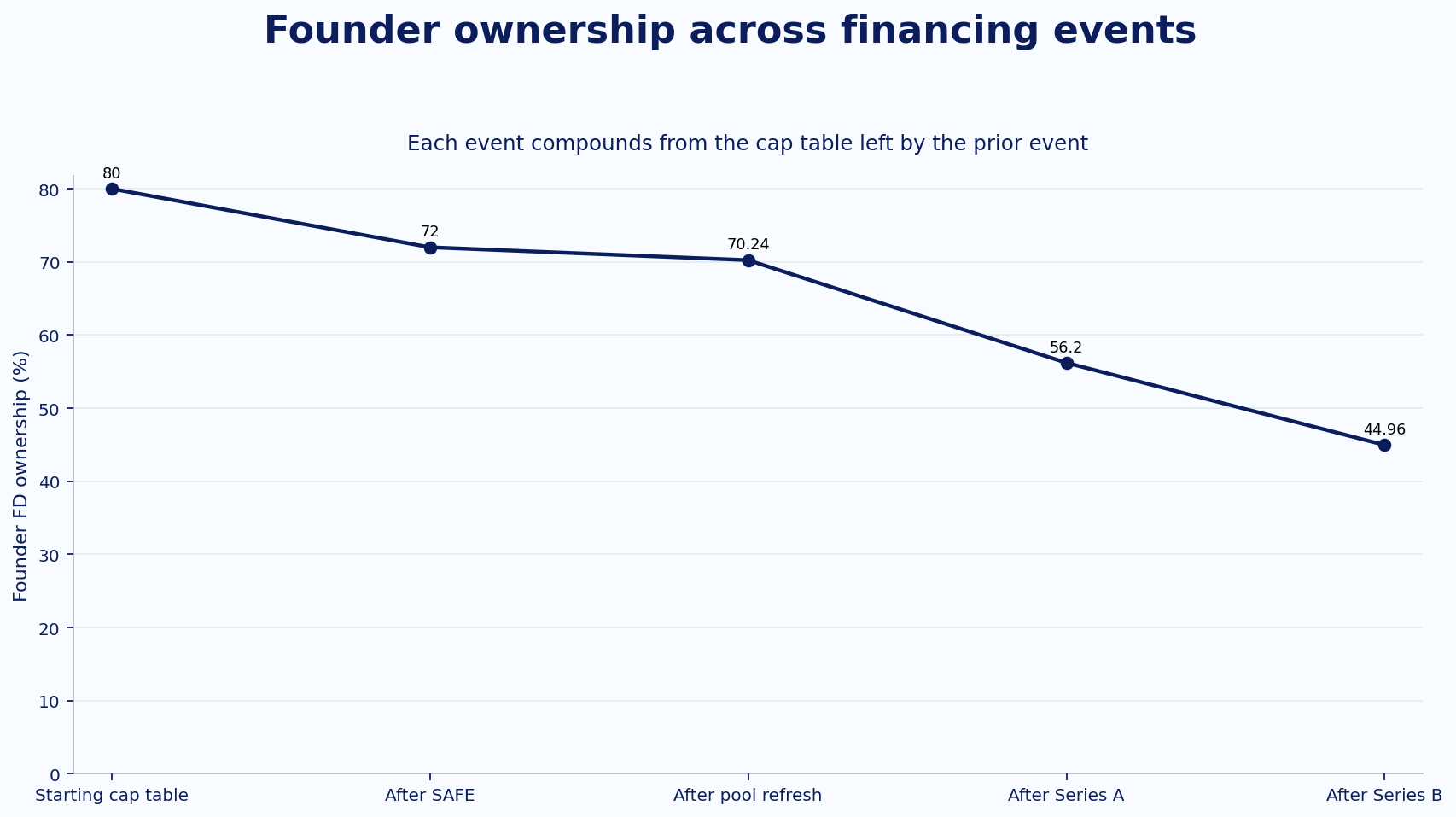
每一輪稀釋都承接上一張 cap table,而不是重新從創辦人 100% 開始。
這就是 multi-round dilution 最基本的記帳方式:上一張 cap table 留下什麼,下一輪就從那裡繼續。Northstar 從 80% 走到 44.96%,中間不只有兩個「20% round」,還有 SAFE conversion 和 option-pool refresh。
44.96% 是 ownership 答案,還不是 payout 答案
現在把 cap table 暫停在 44.96%。接下來不再改 shares,只改公司出售時可分給 shareholders 的價值。
Preferred stock 的 payout 會受實際權利影響。以 Delaware corporation 為例,DGCL §151 允許不同 classes / series 的 stock 在 certificate of incorporation 或經授權的 resolution 中設定不同 preferences、rights、limitations。這是 Delaware-specific 的法律例子,真正交易仍要回到 operative documents。
這個案例只需要三個機制:
- Liquidation preference:某輪 preferred 能不能先拿回約定金額。
- Conversion choice:non-participating preferred 是拿 preference,還是轉 common 後按 ownership 分。
- Seniority:不同輪 preferred 是同順位 pari passu,還是某一輪 senior。
為了把 waterfall 算完,Northstar 採用一組純教學、非市場標準的 synthetic rights stack:
- Series B:1x non-participating preferred,senior,$8M preference
- Series A:1x non-participating preferred,$4M preference
- SAFE 已轉成 preferred security;本案例給它 $1M preference,與 Series A pari passu
- 未授予的 pool 不會只因為被 reserve 就自動拿到 exit proceeds。為了讓模型封閉重算,這裡假設表中的 12.8% pool 到 exit 時已全部成為已授予 / 已行使的 employee common
- 下方三個 exit value 都是 equity proceeds available to shareholders,不是 enterprise value
如果從 enterprise value 開始,通常還要處理 debt、cash、交易成本與其他 closing adjustments,才會得到真正可分給股東的 equity proceeds。
另外,若 SAFE 到 liquidity event 時仍未轉換,它自己的 liquidity-event 條款可能和這裡假設的 converted preferred 不同。這時要讀實際 SAFE,而不是套用下面的結果。
同一張 cap table,換三個 Exit Waterfall
$15M:preference 幾乎吃掉前段價值
Series B 若轉 common,20% 只值 8M preference**。Series A 也選 1M preference。
4M + 13M
剩下 $2M 給 common,依本案例 founder / employee common 的相對比例分配:
| Holder | $15M exit proceeds |
|---|---|
| Founders | 約 $1.56M |
| Employee common | 約 $0.44M |
| SAFE preferred | $1.00M |
| Series A | $4.00M |
| Series B | $8.00M |
| Total | $15.00M |
創辦人的 cap table 仍是 44.96% FD,但這個 exit 下只拿到約 $1.56M,約占 equity proceeds 的 10.4%。
$30M:B 拿 preference,A 與 SAFE 轉 common
Series B 的 20% as-converted value 是 8M preference,因此先拿 22M** 後,Series A 與 SAFE-converted security 改成 conversion 比各自的 1M preference 更有利。
| Holder | $30M exit proceeds |
|---|---|
| Founders | 約 $12.36M |
| Employee common | 約 $3.52M |
| SAFE converted | 約 $1.72M |
| Series A | 約 $4.40M |
| Series B | $8.00M |
| Total | $30.00M |
這時 cap table 沒變,改變的是每一輪 preferred 在這個 exit value 下的最佳經濟選擇。
$100M:全部 conversion
到了 20M,已高於 $8M preference。Series A 與 SAFE 也都更適合轉 common。
| Holder | $100M exit proceeds |
|---|---|
| Founders | 約 $44.96M |
| Employee common | 約 $12.80M |
| SAFE converted | 約 $6.24M |
| Series A | 約 $16.00M |
| Series B | 約 $20.00M |
| Total | $100.00M |
三個結果放在一起:
| Equity proceeds | Founder ownership | Founder proceeds | Waterfall mode |
|---|---|---|---|
| $15M | 44.96% FD | 約 $1.56M | Preference-dominant |
| $30M | 44.96% FD | 約 $12.36M | B takes preference; A / SAFE convert |
| $100M | 44.96% FD | 約 $44.96M | All convert |
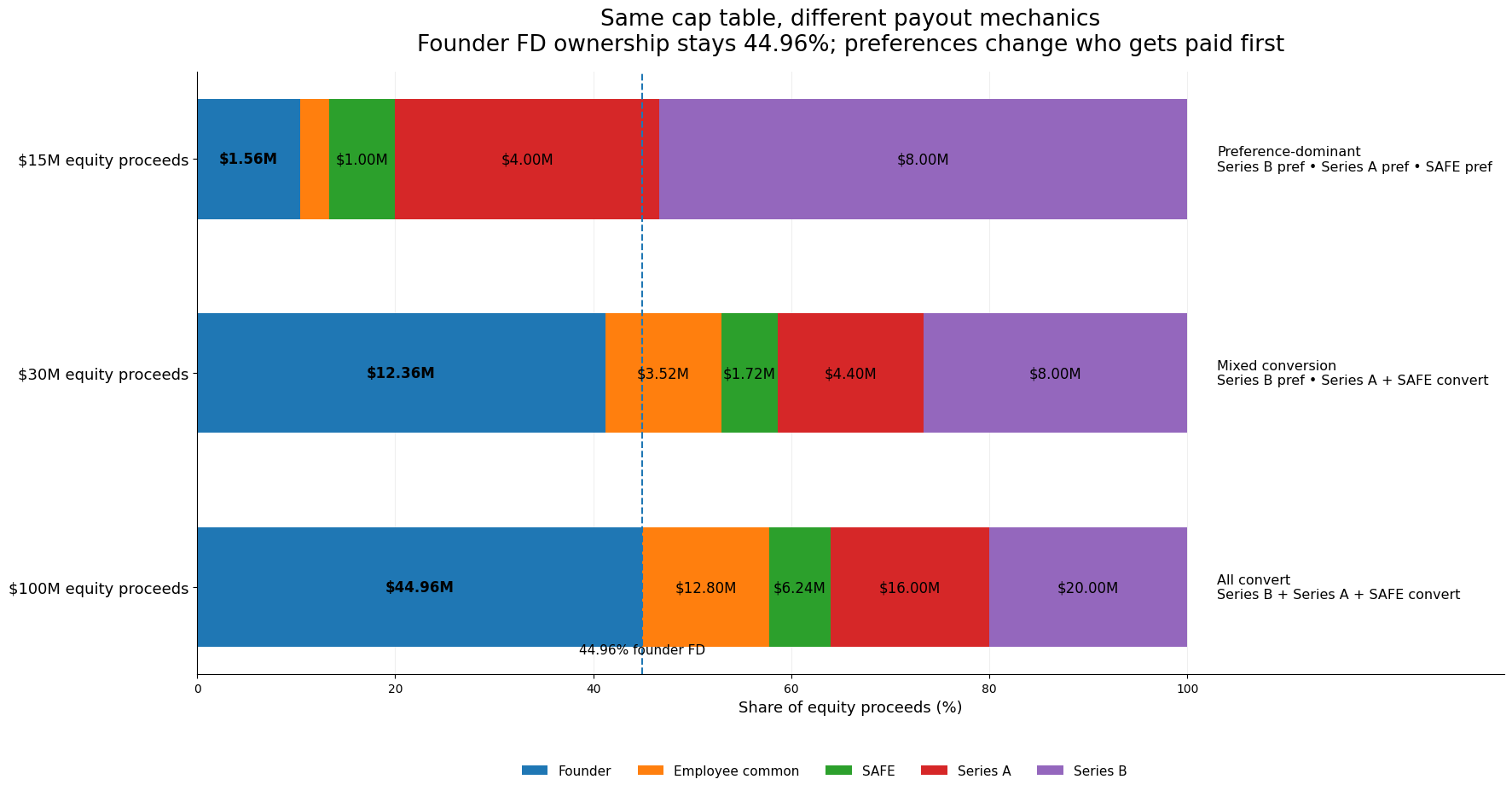
同一張 cap table 不代表每個 exit 都按持股比例分錢;當 liquidation preferences 仍具約束力時,payout mix 會偏離 fully diluted ownership。
三個情境裡,創辦人的 44.96% FD ownership 都沒有變;變的是不同 exit value 下 preferred rights 如何影響分配,所以 founder proceeds 才會從約 44.96M。
拿到 term sheet 時,先跑這八題
Northstar 的 founder ownership 從 80.00% 依序走到 72.00%、70.24%、56.20%,最後是 44.96%。把每一步的 cap table 留下來,才看得出這些變化各自是由哪一次融資或 pool 調整造成。
實際看 SAFE、term sheet 或 cap table 時,可以先把下面八題寫在模型旁邊,再判斷 valuation 與條款是否合理:
- 這張 cap table 的 as-of date 是什麼?
- Denominator 包含哪些 securities、options、reserved pool 與 convertibles?
- 哪些項目會 convert,什麼時候 convert,用什麼公式?
- Option pool top-up 是 pre-money 還是 post-money?
- 這輪新增多少 shares,附帶哪些 preferred rights?
- 下一輪從哪一張 cap table 接著算?
- Liquidation preference、conversion choice 與 seniority 實際怎麼寫?
- Exit model 用的是 enterprise value,還是可分給股東的 equity proceeds?
把這八題的答案保留下來,你才有辦法從融資前 cap table 一路重算到 exit waterfall。這比單獨記住一個 valuation 更接近「我到底賣掉多少公司」的答案。
References
- Y Combinator, The SAFE — the open standard for startup fundraising
- Y Combinator, SAFE vs. convertible note vs. priced round
- Y Combinator, SAFE conversion calculator
- National Venture Capital Association, Model Legal Documents
- Delaware Code Online, Title 8, §151 — Classes and series of stock; redemption; rights
- Carta, What is an option pool? A guide for startup founders